
Lugs of Destiny
Bob Roll called it his favorite bike of all time. It was a Huffy-stickered frame, painted in 7-Eleven team colors, produced in the Serotta shop. And the lug set, designed and made by Kelly Bedford, would be in hot demand for decades to come.
When beloved cycling figure Bob Roll spoke with unexpected reverence about the best bike he ever raced—holding a photo because he no longer owns it—his comments quickly racked up nearly 90,000 views on YouTube.¹ The bike? A steel Huffy, which Roll effusively called an “absolutely delicious machine” and his “favorite bike of all time.” This wasn’t one of Roll’s playful provocations; he was talking about his custom-built Serotta Tour de France bike, a machine that carried the Huffy name only in decals.
As diehard fans know, 2026 marks the 40th anniversary of a milestone in U.S. cycling: the debut—and unanticipated impact—of the American 7-Eleven team in the 1986 Tour de France. That year, Alex Stieda became the first North American to wear the yellow jersey, and Davis Phinney won a stage, proving Americans could compete at the highest level. But the team’s bikes left a mark of their own.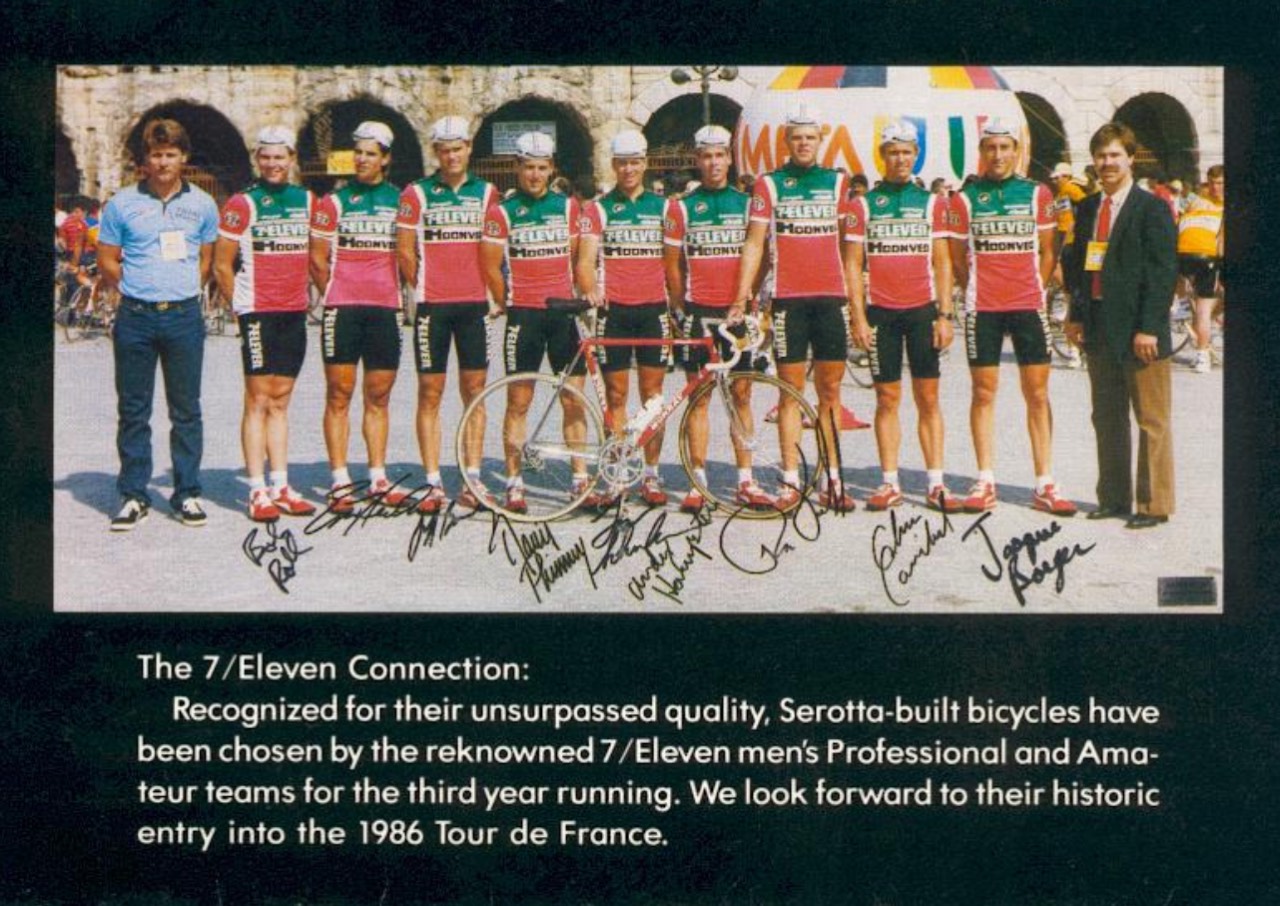 Those were the days: a photo from the 1986 Serotta catalog. Courtesy: Ben Serotta
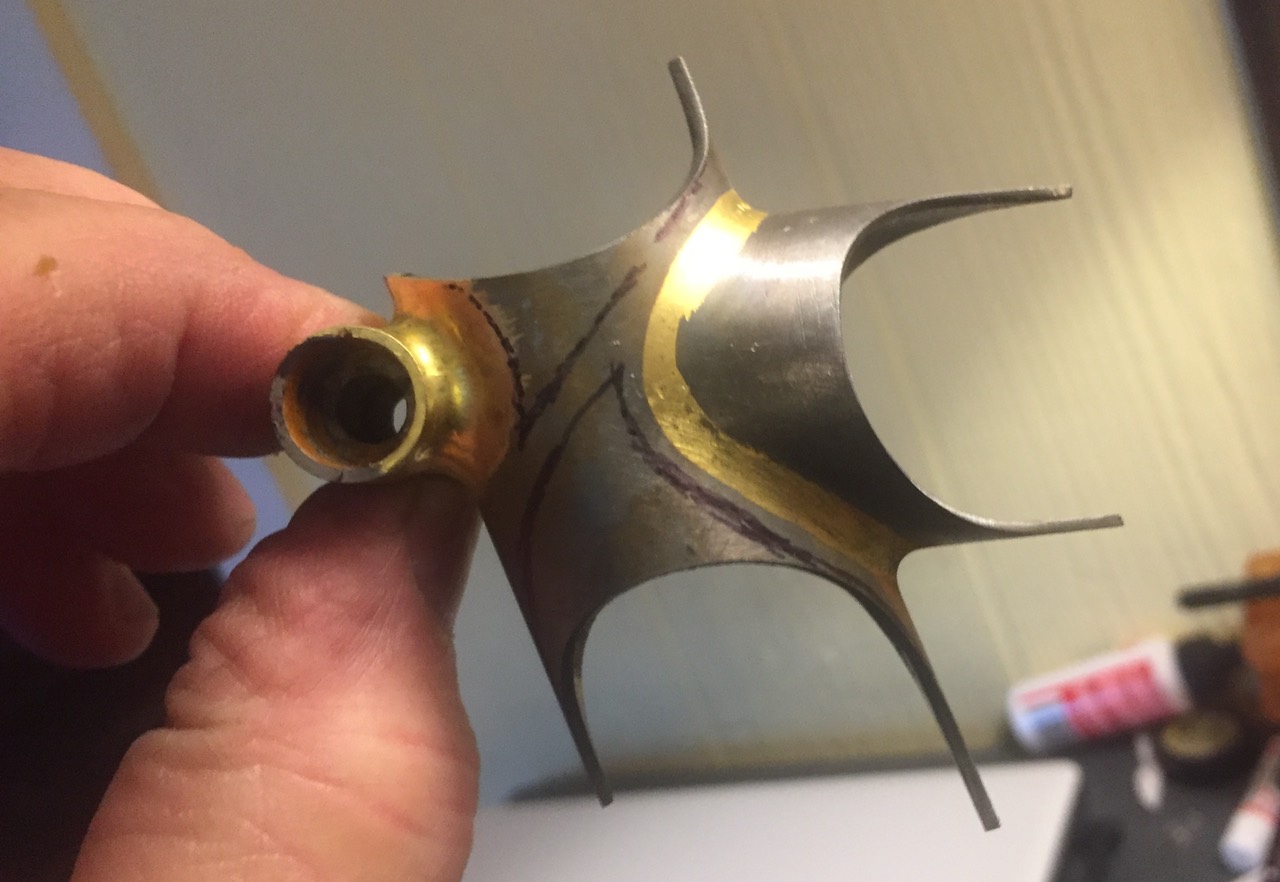
Painted in the iconic red, white, and green 7-Eleven colors, the early Tour bikes look orthodox at first glance—aside from the curved non-drive-side chainstays for extra stiffness, a technique Serotta began using on U.S. track bikes in ’84. But the lugs—rather than plain, utilitarian sleeves meant to disappear under paint—were visible artistry: negative space, sharp edges, a visual rhythm. They became known as the Serotta “TDF lug cut,” requested by customers for the next three decades, a shorthand for Serotta craftsmanship.
The craftsman behind those lugs was newcomer Kelly Bedford. Not even on Serotta’s payroll, he arrived on a two-day trial. When Ben Serotta asked him to shave weight off a set of standard Henry James lugs, Bedford produced something transformative: decorative cuts that turned utilitarian steel into signature design. It was as if a courtroom sketcher had suddenly drawn the Vitruvian Man.
Notably, those lugs outlasted the frame spec itself — the design carrying forward even as Serotta shifted from Columbus to True Temper tubing for later Tour builds, such as Roll’s ‘88 model. On a Reddit thread also showcasing an early TDF Serotta-built Huffy, cycling aficionados obsess over Bedford’s improvisation as enduring art: “That seat lug! Fire fire fire!”; “The head tube lugs are cut out too!”; “That is one beautiful frame.”²
Bedford’s mastery was underscored by the fact that he had built only fifteen frames at the time—and was entirely self-taught. He clung to a dog-eared “very special little paper handbook”: The Proteus Frame Design Handbook, a do-it-yourself guide published in the mid-70s by a small but influential framebuilding collective in College Park, Maryland. “The handbook taught you how to build frames without any specialty tools like jigs and fixtures,” he says.
By 1986, Bedford was running a bike shop in South Florida. With thirteen years of retail behind him, he was at his limit. “I had wanted out of the retail business so bad,” he says.
The 1980s were the pinnacle of steel, and Ben Serotta had long been on the cutting edge of American design and fabrication. The company was expanding and needed help. Out of the blue, Bedford got a call from a friend and former colleague who had spent the past year working for Serotta in upstate New York. “Jimmy (Sanders) recommended me,” Bedford recalls. “I was delighted—that was my dream.”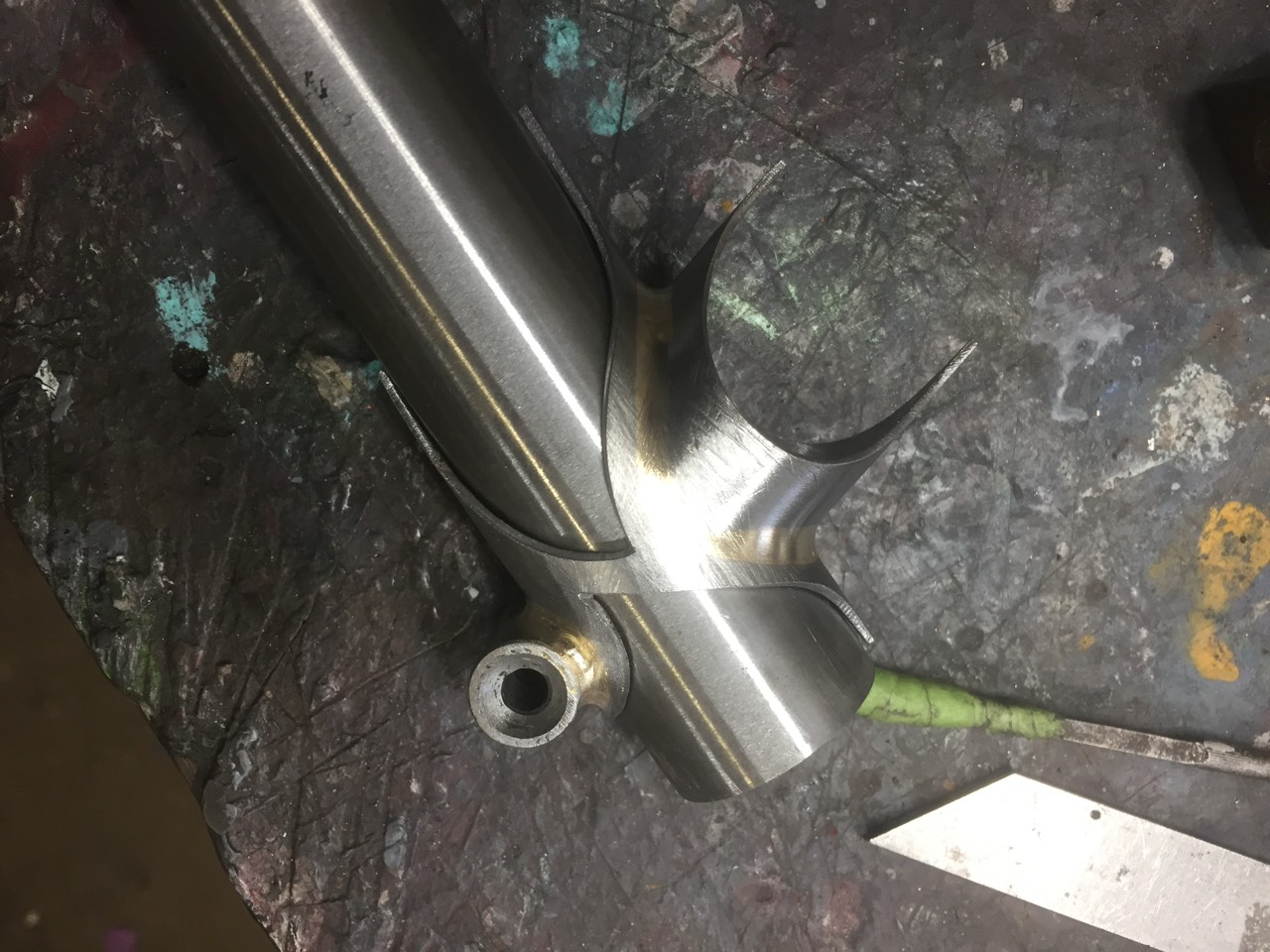 It's Alpe d'Huez, it's hot, you're suffering, you notice the guy that glides past has a little less metal on his bike. That gets into your head. Photo: Kelly Bedford
Serotta had been building the 7-Eleven team bikes since 1983. He built Murray-badged frames for the team at the 1984 Los Angeles Olympics and again for their European debut at the 1985 Giro d’Italia. And now Huffy would get the label as bike sponsor in 1986.
“The TDF bikes were another level altogether,” Serotta said over the phone recently. “We wanted to show the guys on the team we were doing everything we possibly could to give them an advantage—or at least be equal.” Asked whether it was a stressful period, whether there were close calls or near disasters, he replied: “Yes, yes, and yes.”
“We needed to prepare their spring-season bikes, not just the TDF bikes,” Serotta recalls. The Tour was six months away. Into an atmosphere tightening by the day, Bedford arrived for his try-out —“so Ben could see if I really had anything,” Bedford says.
It was the dead of January in upstate New York. Serotta’s Greenfield operation included a chicken coop converted into the office and a rickety red barn converted into the factory. “It was pretty rough,” Bedford recalls, “full of holes and freezing cold the whole time.”
“The first thing Ben handed me was a bundle of about a hundred seat stays,” Bedford says. “He showed me how he wanted all of them hand-slotted on the ends to fit the dropouts. So I spent nearly the whole first day doing that.”
On the second day, Serotta handed him a set of Henry James lugs—the only U.S. manufacturer rivalling European quality. The mandate: save weight and create something distinctive for the Tour. “My mind started racing immediately,” Bedford says. No sketch, no drawing—just inspiration and a Sharpie on the lug like a napkin sketch.
Bedford didn’t know if he was shaking from excitement or the cold. “Pretty quickly I came up with an idea in my head,” he says. “I drew my design roughly and just started hacking away with a hacksaw, files, and emery. It came out exactly the way I wanted, and he (Ben) loved it. From then on, that established the pattern of the Tour de France lug cut.”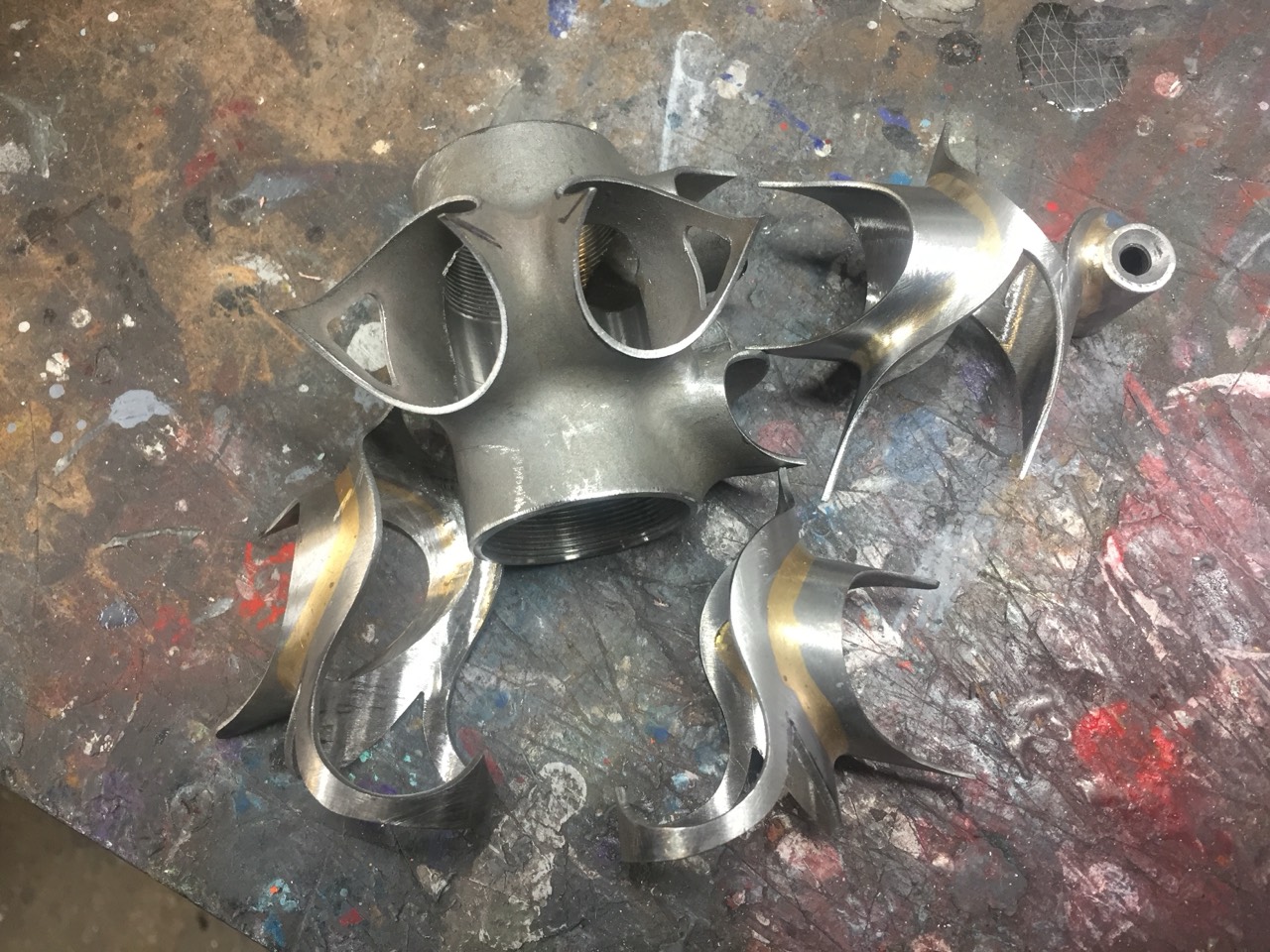 The TDF lug cut. Collector's items. Photo: Kelly Bedford
The lugs’ thinned walls flowed from the joints with elegantly stretched, tapered points: proportion before decoration, restrained rather than ornate. Lighter and more alive, the lugs were proof that steel could be functional art.
“It was clear to me quickly that Kelly was both an artist and an artisan,” Serotta says.
Serotta recalls cutting triangular windows and star points in the ’70s when working with heavy English Hayden lugs. “I gave him a little bit of an idea I had baked in my head, and he came up with a notion that was similar,” Serotta says. “I do remember having a lot of faith in what his abilities were.”
After the trial, Bedford headed home—but not before Serotta saddled him with two boxes of raw lugs to cut. The lugs almost didn’t make the journey. “I had them in my carry-on, but they wouldn’t let me keep them because they looked like weapons when they were X-rayed,” Bedford says. “So the pilots kept them in their cabin,” he recalls, chuckling at the thought of it post-9/11.
He spent nearly a year working from afar, carving lugs and mailing them north. By the following winter, Serotta offered him a full-time job—the fourth craftsman on the team. He would work closely with the Tour riders for years, incorporating their feedback into steel designs.
But by the mid-90s, the march of materials rendered lugs relics. “(Steel) sales fell off a cliff,” Bedford says. Intricate cuts were replaced by seamless titanium welds and molded carbon. The artistry vanished with the material.
In subsequent years, Serotta offered anniversary reissues of the TDF bikes, including a 20th-anniversary edition. But by the time the company began producing carbon bikes, “if someone called and wanted a steel frame they would say no,” Bedford says. “A couple times a year someone would desperately want one and we would charge a premium price. They were very expensive.”
Bedford moved to head of production and eventually chief frame designer, but he would fondly step away from those duties. “They would throw the order on my desk and say ‘Build it,’” he says. Film director James Cameron ordered one for his son.
In the 2000s, Serotta offered a final reissue of the TDF bikes, but it only highlighted steel’s decline. “There were only five ordered and none of them got built,” Bedford says. “Except for one.”
“Most customers were eventually talked into the super-duper Ottrott (a titanium-carbon layup), but this one customer was dead set on his anniversary bike. Period. And Ben came to me and said that Ian (Buchanan, owner of Fit Werx in Waitsfield, Vermont) has this customer and he’s not going to give up—would you mind building it? And I said, of course, I’d love to do it.”
As Ian Buchanan puts it, the lug design “showed an appreciation and understanding of the European craftsmanship and tradition,” but Bedford’s work also arrived at the exact moment American cycling was discovering its own mythology. The 7-Eleven team was storming Europe and, as Buchanan notes, Hollywood had just released American Flyers, while a generation of riders—Kiefel, Hampsten, Phinney, Stieda, Bishop (R.I.P.), Roll, Grewal, Heiden, Twigg—made it feel as if the sport had suddenly turned American. The 1986 and early Tour frames became totems of that moment: European-level craft fused with American ambition. “The livery became legendary,” Buchanan says.
During his 21-year tenure, Bedford rode the economic boom and the bust. He helped realize Ben Serotta’s dream of returning operations to Saratoga, building a new factory at the height of the titanium boom—only to see it collapse with the 2008 financial crisis.
In 2009, Bedford launched a workshop in Saratoga County to build bespoke steel and titanium frames under his own name. Serotta, too—after the 2012 bankruptcy—returned to small-scale frame building in Saratoga. Their paths, once intertwined, now run parallel.
That last steel TDF replica built in Serotta’s factory was both eulogy and, for some, resurrection.
Steel frames, no longer just a nostalgic throwback, have regained a devoted following, thanks in part to uncompromising builders like Richard Sachs who never abandoned the medium. Gravel, touring, and custom riders have rediscovered steel’s comfort, durability, repairability, and lively feel. “There’s something about the way it rides—it’s just really special,” Serotta says, adding that bikes are like guitars: you need a quiver.
And for Bedford: “I like the sensitivity of it, the snap in response.” Building in steel, he says, “allows for more creativity, and I feel like I’m putting more of myself in it.”
Still, the two estimate that maybe only 10% of their orders today are for steel.
A visit to Bedford’s workshop reveals a cluttered but purposeful space: fluorescent-lit, lined with tubing racks, shelves of brazing supplies, a frame mounted in a jig mid-construction. It is equal parts fabrication shop and creative studio. A beautiful wooden surfboard he recently handcrafted sits off to one side—a ’70s retro fish, a nod to his Florida roots.
Watching the 71-year-old work, it looks as much like consecration as construction: oxy-acetylene torch in one hand, filler rod in the other, raised near his heart as if in prayer, blessing each frame with his trademark intricate flourishes.
Bedford has also created jewelry and carbon-fiber fly-fishing reels. Still, one request remains off-limits. “There was never any sort of patent on the TDF design of those lugs,” he explains. “Anyone—if you knew how to do it—could cut those lugs. Out of respect, they are associated with Serotta, so I wouldn’t do them.”
Like the role of a domestique—such as Roll—Bedford chooses legacy over personal glory, transforming a design flourish into a creed. In the lugs’ absence, one feels their presence: Bedford’s adherence to an unwritten builder’s code; his choice of reverence over commodification; and his honouring of the sport’s lineage and the historical achievement of those early Tour teams. It’s a reminder that some designs belong to their moment so they can truly be remembered.
Related articles

Killerdrop System Features at Sea Otter
02 Apr 2025
Tomii: More Than a Pretty Bike
02 Sep 2024
NorCal Resurgent: Zabrina Cycles
18 Aug 2024