
Chantal Lachance, godmother of the international mtb scene
We learned of Chantal's passing on October 18, 2026. Her role in shaping mountain bike events, as an official, an organizer, a motivator, keeping things fun for everybody, was enormous.
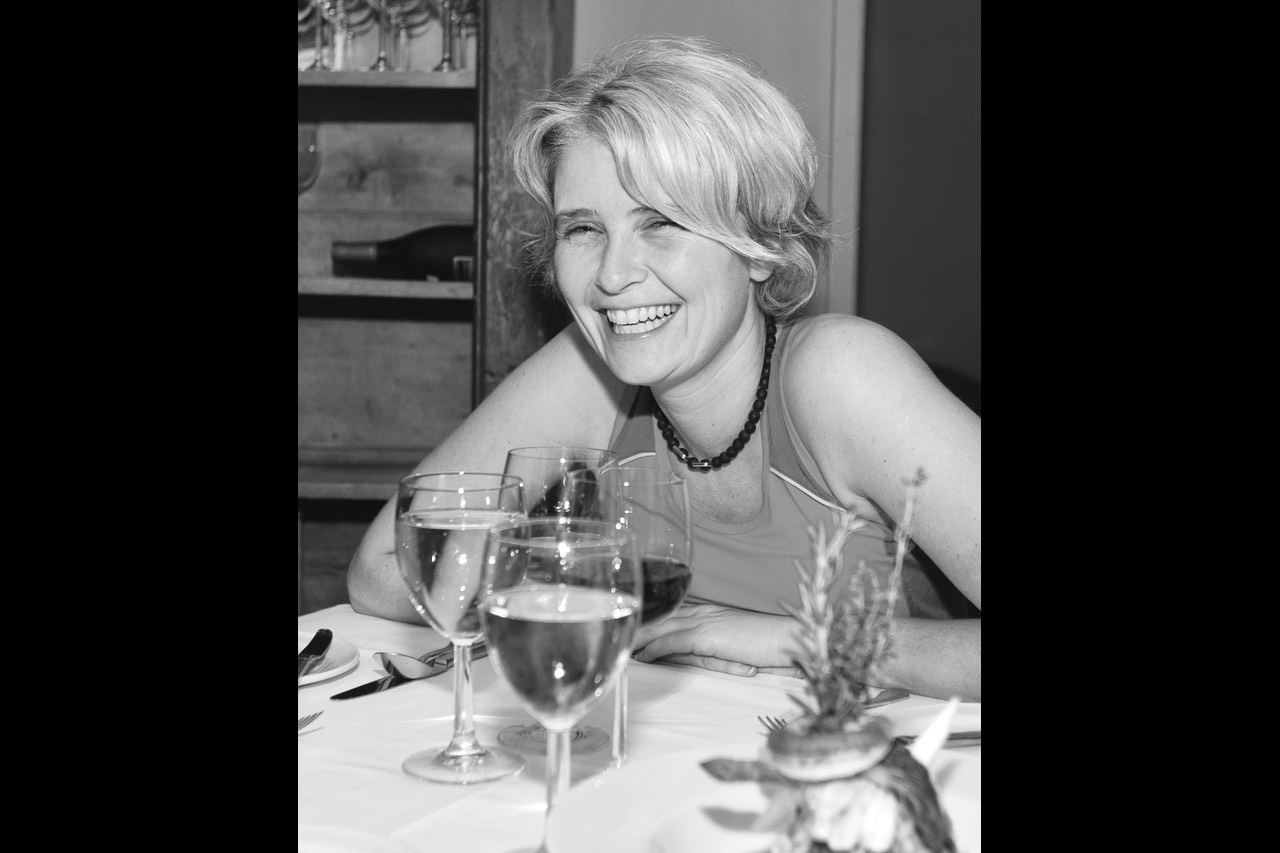
The news came through Facebook from Patrice Drouin, her long-time business partner. It was Sunday evening, October 18, 2026. Chantal Lachance, the godmother of international mountain bike racing, was gone, just short of her 61st birthday. With us no more. Everybody was shocked, bewildered, and above all saddened that this amazing woman was no longer in this world. We never imagined this, never contemplated it as a thing that could happen. Lung cancer.
Those shining blue eyes, the radiant smile, and her kind, friendly way of controlling things, Chantal carried the considerable responsibilities of her job with a smooth, confident ease. And when it was time to relax she had a delightful ability to shrug off the work day and become the best dinner companion, or the charming, light-hearted hostess of the hugely entertaining events she and her cohort of female staff and volunteers had cooked up for the evenings. “I’m good at changing gears,” she used to say.
Those parties must have taken a great deal of planning. “We want to do it for the riders and team staff, all the people who live and travel on the circuit. It’s not easy to be away from home for so long, so we want to make these days at Mont-Sainte-Anne a little break, a fun time for everybody to enjoy,” she once explained.
Patrice and Chantal’s company, Gestev, was, for my money, the world’s leading mountain bike event organizer. Patrice is a first-rate operations manager, and he left the marketing side and the hospitality and entertainment to Chantal — and Carol, Annie, and Christine. Others too, but these were the quartet I would see the most of in those halcyon years of the mid-1990s. They ran the protocol and festivities, welcomed journalists as VIP guests, ramped up the sense of expectation as the sun went down. Everybody looked forward to those Mont-Sainte-Anne World Cup events.
We called them ‘the Gestev girls’. You could probably write a television series about the life and stories they created in those small towns about 20 miles northeast of Quebec City. Saint-Ferréol-les-Neiges, or Beaupré, one of the two, or both. I never quite troubled myself to find out who was where exactly, Patrice or Chantal. The impression was that a lot of hard-working, talented people across that community had decided Gestev was the thing to be a part of at some level. Patrice and Chantal were joint leaders of a formidable local movement.
In the sporting world mountain biking was early to the party promoting female athletes, and on the administrative side Chantal’s largely female office was a beautiful example of how good things can be when women do it their way.
The first I knew of Gestev and Chantal was the World Championships at Bromont, Quebec, in 1992. At the media check-in the woman, I think it may have been Carol, handed me my press pass and a printed card with a name and a face, and was that a wink? The Canadian pro, Cindy Devine, was on my card. The female journalists got a male pro rider. What happens in Bromont stays in Bromont — that was my first thought, which Chantal confirmed with a smile and a laugh, and a look off to the side that suggested all kinds of things were possible. She enjoyed her handiwork so much.
I’d overloaded myself with assignments for various publications at that event. On the Monday morning my hotel kicked me out at 11, and with deadlines to meet I went to the race management office and asked for a table and chair. About four hours later Chantal came to me with a nice bottle of Canadian Club whisky. “Thank you for writing so much about our event,” she said. It was unexpected, and very generous, but this was just the way she was: she knew how to look after people.
In the middle of that decade we came to know each other a little better, and she demonstrated her friendship and affection for me through ritual humiliations at the Gestev parties. I’d be called up on stage in front of the VIPs or a full house of athletes, and soon would be made the laughing stock of the room, which was invariably painful, but a sort of honour I don’t think I’d trade for anything.
When Chantal was involved, mischief and romance were on the agenda. Some years later, at the 1999 World Championships in Åre, Sweden, where Gestev had been hired to help run things, Chantal briefed the event volunteers as a group. After the main points and an acknowledgement of how fortunate this event was to have these individuals, in particular, as the volunteer corps, she made a clear, if surprising, point: “Don’t forget about romance. You might meet somebody really special at this event, so just keep that thought with you.”
When Chantal wasn’t organizing races, she was often there at the biggest events as a commissaire, in many cases as chief commissaire. She held that post at the 2000 Olympics in Sydney — maybe others too, but that’s the one I was at. I watched her in action, deciding an athlete protest by the silver medallist there. Since I was with the Sydney Olympic News Service, she let me into the commissaires’ room while she heard the complaint and viewed the video evidence. She was kind and sympathetic to the athlete, but very firm that there was no case to contest, and that was the end of it.
It was not until several years later that I learned one of the reasons Chantal kept on getting the top commissaire’s job. Of course she was very good at it, because Chantal was clever at pretty much everything. But this story came to me from Marc Lemay, the person who pushed so hard for the UCI to pick up mountain biking and who led the first UCI mountain bike commission. Lemay, another Québécois, lived not too far from Gestev and knew Chantal and Patrice, who had been organizing mountain bike events for a few years before the first UCI World Cup series in 1991. They were strongly involved in planning and running the first commissaire courses. “If I didn’t have Chantal and Patrice it would have been very hard to have a commissaire’s course in 1990,” he told me.
After the 1990s my focus was no longer on the mountain bike World Cup circuit. And Gestev, too, broadened its horizons, organizing events in different sports, learning, progressing, continuing to evolve. Chantal became a significant figure in the Quebec City region, for her considerable and consequential contributions to its sporting and cultural life. It was difficult to imagine Chantal doing anything else, but eventually they sold Gestev and she took her engaging presence and glowing energy to other industries, and no doubt people in those places are now mourning her loss. Chantal enchanted and impressed people everywhere she went. Many will sorely feel her absence, but our memories will always be most fond.
Related articles

Nelson Frazier: Dario's gigantic family
27 Aug 2018
Checking in with Sam Whittingham
20 Mar 2018